
Exhibition Technology
Exhibition Stand Technology Planning in Dubai — LED, Interactive, and Robotic Activations
Exhibition stands at technology events in Dubai and the UAE now rely on integrated AV systems, interactive installations, and robotic activations — not just display panels. This article covers the technology components to plan for and the infrastructure decisions that determine whether they work together.
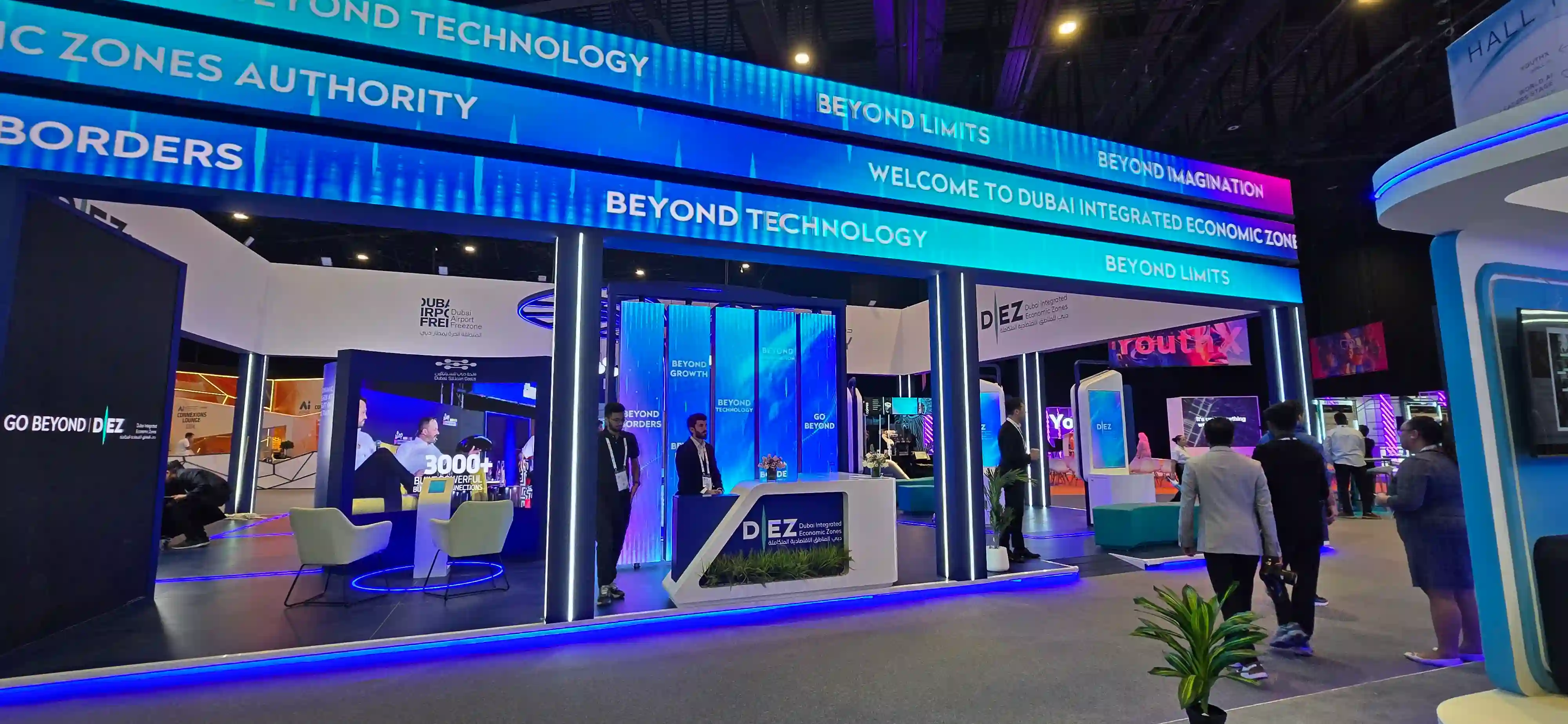
Exhibition stands at technology events — GITEX, ADIPEC, Arab Health, and similar trade events in Dubai and the UAE — increasingly combine multiple technology layers into a single stand environment. LED screens, sensor-triggered interactive installations, motion-based displays, robotic video capture systems, touchscreen games, and AI-powered robotic service units can all operate within the same stand footprint, each requiring separate technical planning, power infrastructure, and on-site support.
Understanding how to plan for these components — and how they relate to each other in a shared stand environment — is the starting point for any exhibition technology brief.
Exhibition stand concepts such as the DIEZ GITEX AI technology stand proposal at Expo City Dubai illustrate how multiple independent systems — LED screen infrastructure, sensor-triggered interactive installations, kinetic LED displays, robotic video capture, touchscreen games, and a three-phase-powered robotic café — must be planned as a unified technical system rather than individual additions.
Why exhibition technology planning matters before the stand build
Technology activations are not add-ons to an exhibition stand build — they are infrastructure decisions. Screen positions, structural mounting points, power distribution boards, network access points, and floor load calculations are all determined by the technology components planned for the stand. Deciding which activations to include after the stand design has been finalised creates retrofitting problems that are avoidable with earlier planning.
Exhibition and trade show solutions provide the framework for integrating technology planning into the stand design process — mapping activation zones, visitor flow, and technical requirements before any structural or production work begins.
AV infrastructure and LED screen planning
LED screens are the most common technology element in exhibition stands, but screen specifications vary significantly: display size, pixel pitch, brightness, viewing angle, and whether the screen is interactive or display-only all affect both the visual outcome and the technical setup required.
A typical multi-zone stand may include a large-format LED wall as the centrepiece, supplementary screens for specific product or content areas, an interactive touchscreen for visitor engagement, and embedded lightboxes for brand framing. Each format has different mounting, power, and cabling requirements.
Technical production and venue engineering covers AV planning for exhibition environments — including LED processor selection, signal routing, power requirements, and the integration of display systems with interactive components.
Interactive information walls
An interactive info wall allows visitors to access categorised information or product content by physically interacting with the display surface — either through touch or through object-trigger sensor technology. A sensor-triggered wall can detect specific physical objects placed in front of the display and surface relevant content panels in response, creating an information interface that is driven by visitor action rather than passive scrolling.
Planning for an interactive wall requires decisions about:
- The number of display panels and the unified surface configuration
- The sensor or touch technology to be used
- The content categories and trigger logic
- The hardware and software integration required to run the experience reliably across the full event period
An interactive wall used well positions a stand as an information hub — giving visitors a reason to engage for longer than a passive display would allow.
Kinetic LED displays and motion-based installations
Kinetic LED installations — display elements that move or rotate as visitors pass through the stand — add a visual layer that static screens cannot provide. A rotating multi-panel LED structure creates a stand centrepiece that draws attention across the exhibition floor and communicates a technology-forward brand identity at a distance.
Motion-based installations require structural mounting systems that can support the mechanical movement, LED processors calibrated to the rotating panel configuration, and content that is designed to work within the motion sequence rather than against it.
Creative design shapes the visual content and motion sequencing for kinetic LED elements — ensuring the display output reads correctly as the panels rotate and that the content aligns with the brand and event context.
Robotic video booth activations
Robotic camera arm systems — commonly referred to by brand names such as Glambot — create a cinematic slow-motion video capture experience for stand visitors. The system uses a programmable robotic arm to move a camera around the subject in a predefined arc, producing high-quality slow-motion video clips that visitors share directly from the stand.
Planning for a robotic video booth involves:
- Stand footprint allocation for the arm unit and operating area
- Branded visual treatment of the arm, base, and output video overlay
- On-site attendant coverage for the full daily operating window
- Wi-Fi connectivity for instant sharing via QR or email
- Daily operating time and the content output format
The brand activation function manages robotic video booths as social content activations — where the primary output is branded digital content created and shared by visitors, extending the stand’s presence beyond the physical event.
Touchscreen games and visitor lead capture
Touchscreen-based games are an effective mechanism for combining visitor engagement with structured lead capture. A visitor registers their name and email before playing, the game provides a brief interactive experience tied to the brand or event theme, and the registration data is captured for post-event use.
For exhibitions, games work best when:
- The registration step is brief — name, email, and optionally a qualifying question
- The game itself is short (60 to 90 seconds is typically sufficient)
- The imagery and branding are customised to the exhibition context
- The hardware is dedicated to the game experience and not shared with other activation functions
This format is a practical alternative to manual lead collection and generates a higher engagement rate than passive contact form displays.
Robotic café and AI-powered service activations
Robotic café systems — where a robotic arm unit serves coffee or other beverages in a branded service experience — represent a category of exhibition activation that combines functional service with novel engagement. Visitors receive a coffee from a robotic system, which creates a dwell-time incentive and a conversation point that supports extended stand engagement.
Planning for a robotic café installation requires detailed infrastructure preparation:
- A dedicated floor footprint, typically 200–250 cm × 150–180 cm
- Three-phase electrical supply (typically 9 kW)
- Floor load verification against the venue’s specified limits
- Delivery, assembly, and dismantlement logistics
- Food-safe permitting for the installation and operation in the exhibition environment
- Consumable supply planning (coffee, ice cream, or other service items) with daily capacity estimates
The installation weight and power requirements for robotic café systems are significant enough that they must be confirmed with the venue before the stand design is finalised. Expo City Dubai, for example, has specific floor loading specifications that apply to heavy equipment installations.
Event production oversees the operational logistics of robotic café installations — including staffing, technical support coverage, and consumable management across the full event period.
Power, load, space, and network planning
A stand with multiple simultaneous technology activations requires coordinated infrastructure planning across four areas:
Power distribution — Each technology element has a specific power draw. Aggregating these across the full stand footprint determines the total power supply required from the venue. High-draw items must be identified early so the venue power allocation can be confirmed and the distribution board specified accordingly.
Structural load — Heavy installations require floor load calculations. The venue’s floor loading specification must be confirmed before any heavy equipment is committed to the stand plan.
Network and Wi-Fi — Multiple activations may share a Wi-Fi dependency: robotic video booth sharing, touchscreen game registration, and interactive wall content streaming may all require reliable on-site connectivity. A single venue Wi-Fi connection may not be sufficient — dedicated on-site networking should be assessed as part of the planning process.
Staffing coverage — Each technology activation that requires an attendant is a staffing requirement. A stand with five simultaneous activations may require five separate trained operators plus technical support staff for the full daily operating window.
These dependencies interact: a late decision on one activation changes the power plan, which may affect the screen configuration, which may affect structural mounting positions. Technology planning works best when treated as a unified system from the start of the stand design process.
How M&M Group approaches exhibition stand technology planning
M&M Group has developed technology and activation concepts for exhibition stands at events including GITEX AI at Expo City Dubai — covering the full scope of LED screen integration, sensor-driven interactive installations, kinetic LED displays, robotic video capture, touchscreen games, and AI-powered robotic service activations.
The approach is to plan technology and stand design together — so that power, network, structural, and staffing requirements are resolved during the design phase rather than after the stand build has begun. For complex multi-zone stands operating across multiple days, this integration is the difference between a coherent visitor experience and a collection of disconnected activations.
To discuss exhibition stand technology planning for an upcoming event in Dubai or the UAE, contact M&M Group through exhibition and trade show solutions or request a proposal directly.
Brand Activation
Brand Activation Strategy in the UAE — Planning Consumer Engagement Events
Brand activations in the UAE require a specific operational approach. This article covers activation…
Event Production
Understanding Event Production Scope — What Production Actually Covers
Event production is one of the most commonly misunderstood terms in the industry. This article expla…